Medical disclaimer: This article is for general information only. It is not medical advice, a diagnosis, or a recommendation to start, stop, or change any treatment. Retatrutide is an investigational medicine and is not approved by the U.S. FDA (or equivalent regulators) for marketing. Do not buy or inject unapproved products sold online. Talk with a licensed clinician about approved options for obesity or diabetes care.
What is retatrutide?
Retatrutide is an investigational, once-weekly injectable medicine from Eli Lilly. Unlike semaglutide (the active ingredient in Ozempic/Wegovy), which mainly activates the GLP-1 receptor, or tirzepatide (Mounjaro/Zepbound), which activates GIP and GLP-1, retatrutide is designed as a triple hormone receptor agonist. One molecule engages three pathways:
- GIP (glucose-dependent insulinotropic polypeptide)
- GLP-1 (glucagon-like peptide-1)
- Glucagon receptor
Lilly’s rationale is that adding glucagon activity may further affect energy expenditure and fat metabolism on top of the appetite and glycemic effects already familiar from incretin drugs. That remains a scientific hypothesis under clinical testing — not a guaranteed clinical advantage until regulators review the full package.
Phase 3 TRIUMPH program: key figures
Lilly’s TRIUMPH Phase 3 program began in 2023 and enrolled more than 5,800 participants across registrational trials for obesity/overweight and related conditions (including knee osteoarthritis pain and obstructive sleep apnea baskets). Results below summarize company topline / efficacy-estimand figures from Lilly investor press releases. They are not head-to-head trials versus Ozempic or Mounjaro.
TRIUMPH-1 (obesity/overweight without type 2 diabetes)
TRIUMPH-1 (ClinicalTrials.gov NCT05929066) randomized 2,339 adults to retatrutide 4 mg, 9 mg, 12 mg, or placebo for 80 weeks. Per Lilly’s May 21, 2026 release (efficacy estimand), average weight change from a baseline of about 248.5 lb (BMI ~40) was:
- 4 mg: −19.0% (−47.2 lb)
- 9 mg: −25.9% (−64.4 lb)
- 12 mg: −28.3% (−70.3 lb)
- Placebo: −2.2% (−5.5 lb)
At 12 mg, 45.3% of participants achieved ≥30% weight loss, and 65.3% reached BMI <30. In a pre-specified extension for people with baseline BMI ≥35 who continued to 104 weeks, the 12 mg path averaged −30.3% (−85.0 lb). Treatment-regimen (intention-to-treat style) estimates were somewhat lower (for example −25.0% at 12 mg at 80 weeks), which is typical when non-adherence is counted.
TRIUMPH-2 (obesity/overweight with type 2 diabetes)
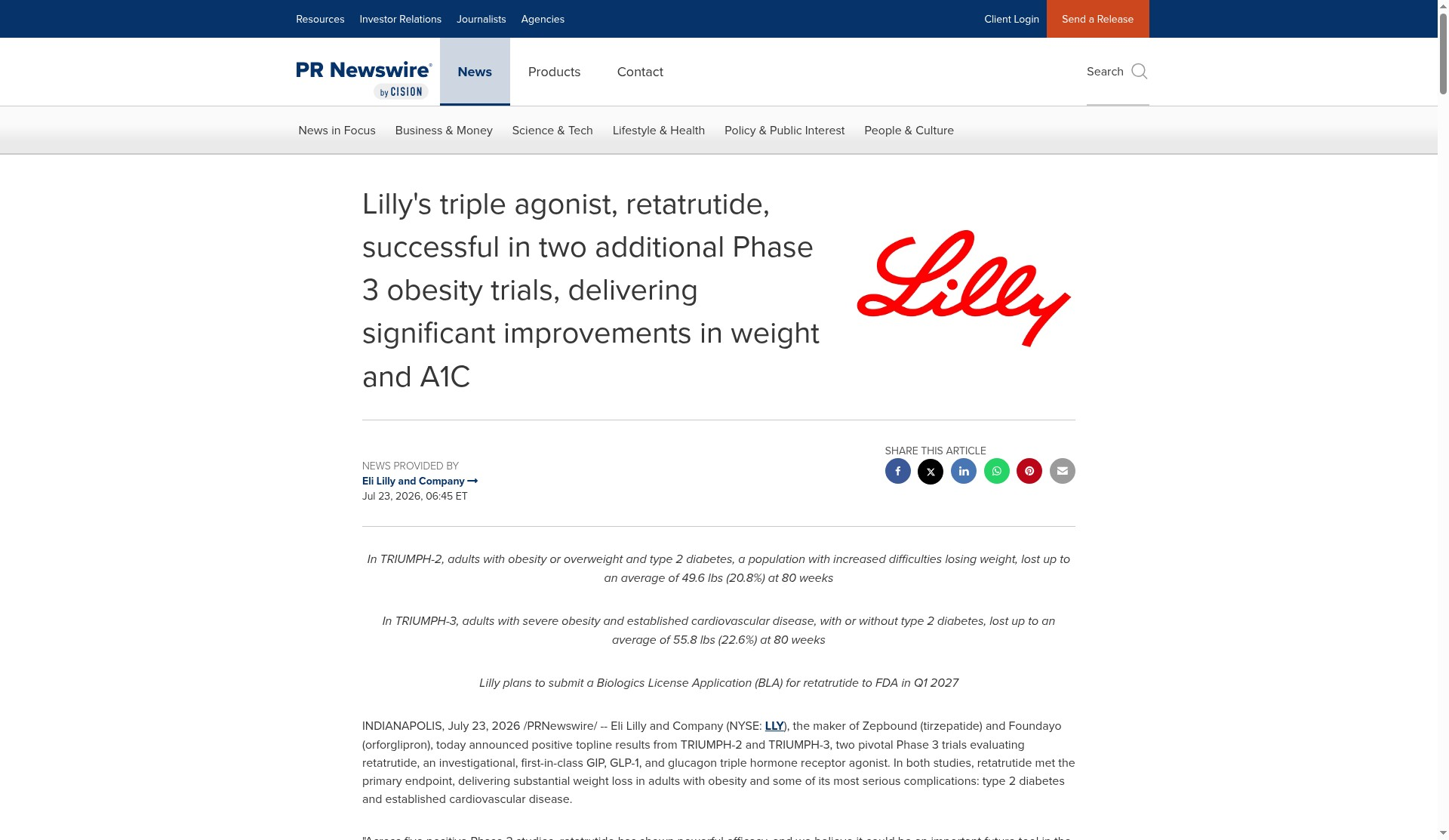
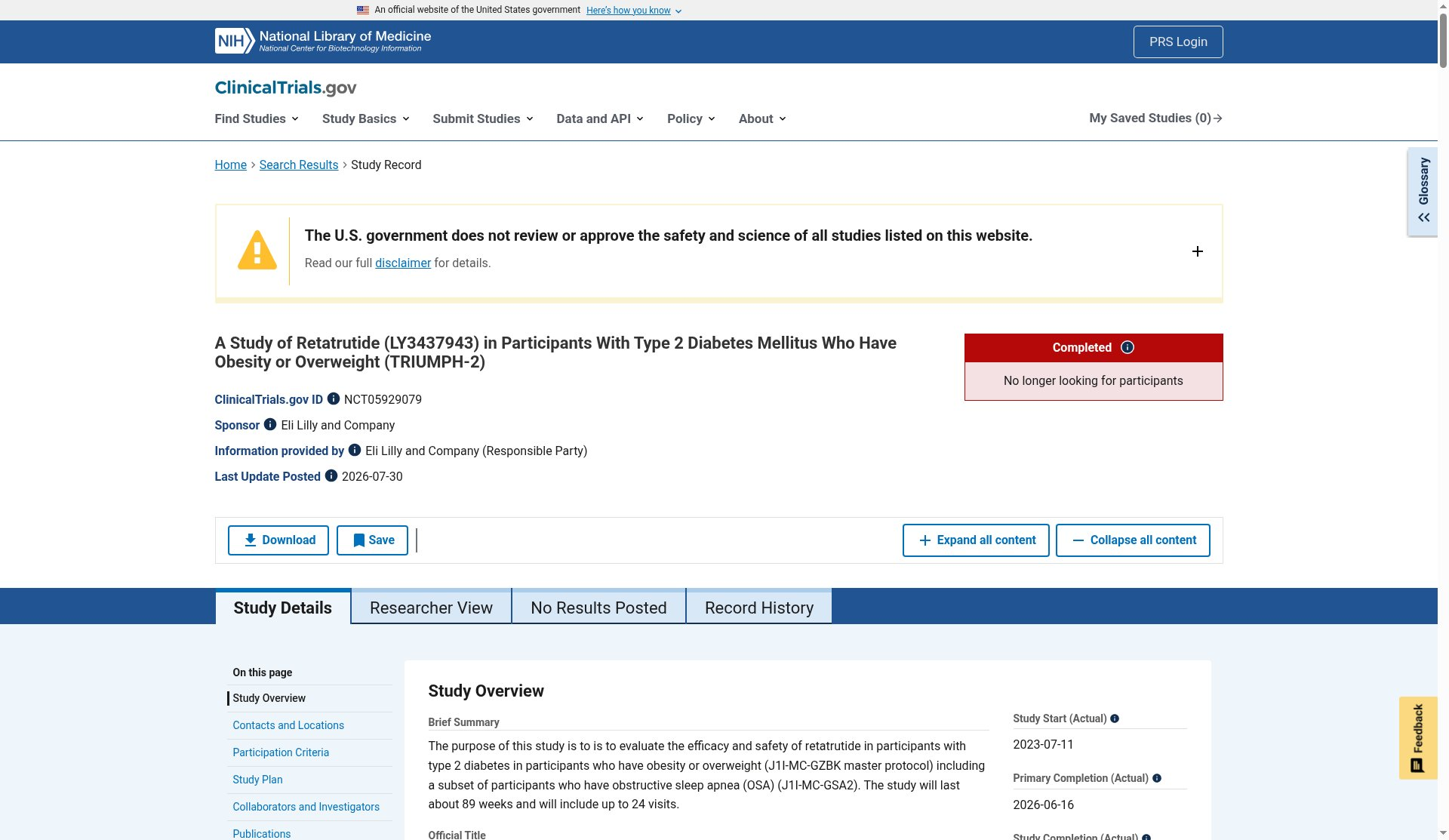
TRIUMPH-2 (NCT05929079; Lancet abstract available) enrolled people with type 2 diabetes — a group that often loses less weight on incretins. At 80 weeks (efficacy estimand, Lilly July 23, 2026):
- 4 mg: −12.7% (−29.8 lb)
- 9 mg: −19.1% (−45.4 lb)
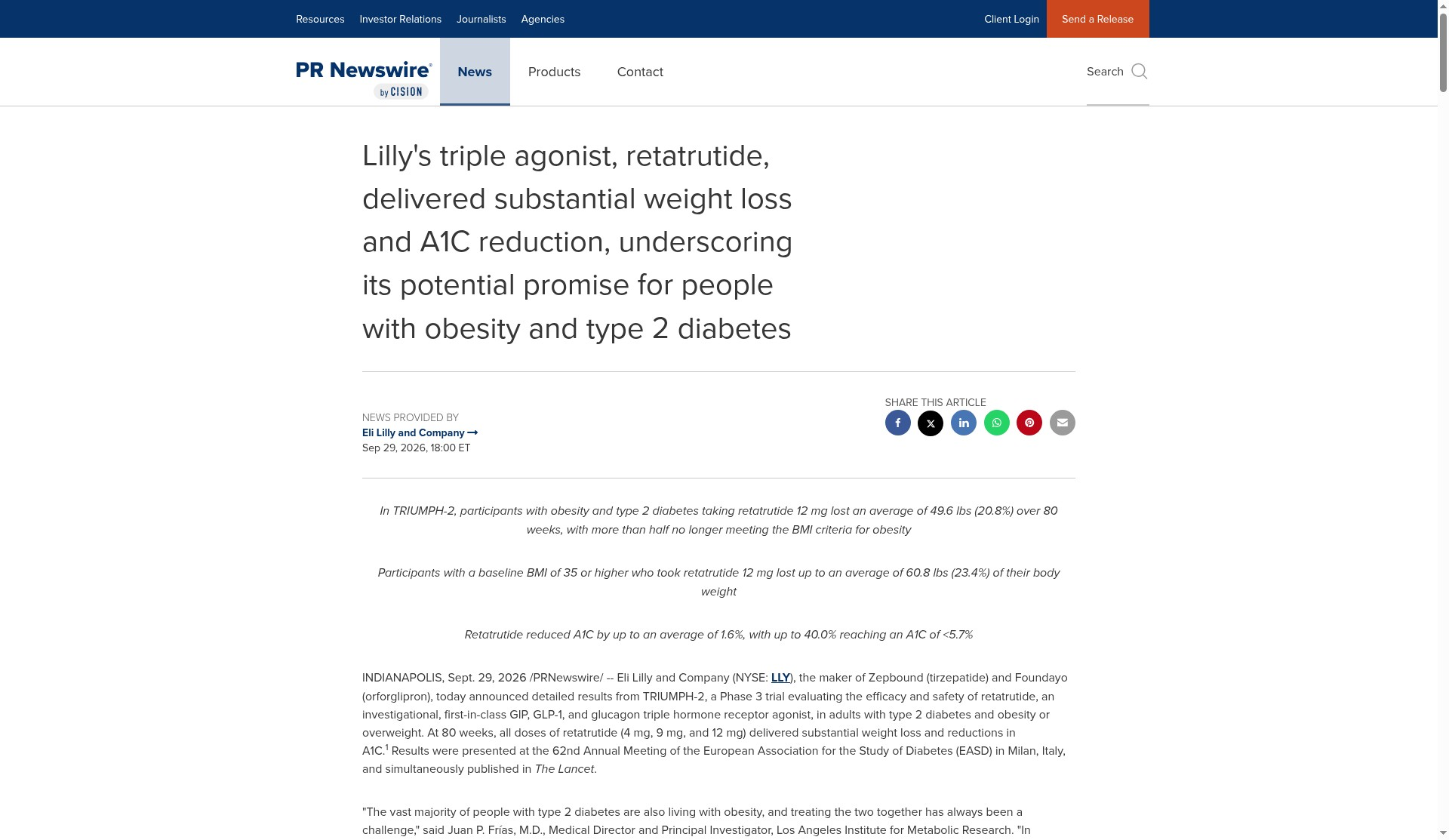
- 12 mg: −20.8% (−49.6 lb)
- Placebo: −4.0%
A1C fell by roughly 1.4–1.6 percentage points on retatrutide versus about −0.2% on placebo (baseline A1C ~7.7%).
TRIUMPH-3 (severe obesity with established cardiovascular disease)
In TRIUMPH-3 (NCT05882045), adults with Class 2–3 obesity and CVD lost up to an average of −22.6% (−55.8 lb) at 12 mg over 80 weeks (9 mg: −21.6%). Cardiovascular outcome signals in the press release were exploratory/pre-specified hazard ratios with wide confidence intervals; they are not a completed outcomes-trial claim of MACE benefit.
How do these numbers compare with Ozempic / Mounjaro?
Cross-trial comparisons are imperfect (different populations, durations, estimands, and concomitant care). As rough context from published pivotal programs for approved medicines:
- Semaglutide 2.4 mg (Wegovy; obesity brand related to Ozempic): STEP-1 reported about −14.9% mean weight change at 68 weeks versus −2.4% placebo (NEJM).
- Tirzepatide (Zepbound; obesity brand related to Mounjaro): SURMOUNT-1 reported up to about −20.9% at 72 weeks at the highest dose versus −3.1% placebo (NEJM).
- Retatrutide 12 mg (investigational): TRIUMPH-1 efficacy estimand ~−28.3% at 80 weeks in people without diabetes — numerically larger, but still unapproved and not a direct comparison.
Ozempic and Mounjaro remain diabetes indications in many labels; obesity dosing brands differ. Always check the current FDA label for approved uses, doses, and boxed warnings.
Side effects reported in Phase 3
Across TRIUMPH-1, adverse events were generally consistent with other incretin-based therapies. Most common on retatrutide (4 / 9 / 12 mg vs placebo) included nausea (28.6% / 38.4% / 42.4% vs 14.8%), diarrhea (25.2% / 34.1% / 32.0% vs 13.5%), constipation, and vomiting. Dysesthesia and urinary tract infections were reported more often than placebo but were usually mild to moderate. Discontinuation due to adverse events rose with dose (about 4.1% / 6.9% / 11.3% vs 4.9% placebo in TRIUMPH-1).
Serious risks known from related drug classes (pancreatitis, gallbladder disease, dehydration/kidney issues, hypoglycemia with insulin/sulfonylureas, possible thyroid C-cell tumor warnings on some labels) are reasons these products need medical supervision — and why unregulated “research peptide” vials are dangerous.
Not approved yet — and black-market warnings
Lilly states clearly that retatrutide is investigational and cannot be legally sold or marketed for human use outside clinical trials. Products advertised as “retatrutide” on social media, compounding gray markets, or “research chemical” sites are not the same as a regulated medicine: purity, sterility, dosing, and identity are unverified. Contaminated injectables can cause infection, organ injury, or death.
Regulators and public-health agencies have repeatedly warned about illegal sales of unapproved weight-loss drugs. If you are exploring obesity pharmacotherapy, ask a clinician about approved options (diet/activity plans, behavioral support, and labeled medicines such as tirzepatide or semaglutide products where appropriate).
Lilly BLA timeline (~Q1 2027)
In its July 23, 2026 investor release on TRIUMPH-2 and TRIUMPH-3, Lilly said it is completing the Chemistry, Manufacturing, and Controls (CMC) package and plans to submit a Biologics License Application (BLA) to the FDA in the first quarter of 2027. A planned filing date is not approval. Review timing, labeling, manufacturing inspections, and advisory meetings can all change the calendar.
Where to verify the primary sources
- Eli Lilly investor news: TRIUMPH-1 (May 21, 2026) and TRIUMPH-2/3 (July 23, 2026) releases on investor.lilly.com / PR Newswire
- The Lancet: TRIUMPH-2 Phase 3 paper abstract (PIIS0140-6736(26)01861-1)
- ClinicalTrials.gov: NCT05929066, NCT05929079, NCT05882045, and related TRIUMPH IDs
- Peer-reviewed incretin obesity trials in NEJM for semaglutide/tirzepatide context
- FDA / MHRA product pages for currently approved obesity and diabetes medicines
FAQ
Is retatrutide the same as Mounjaro?
No. Mounjaro/Zepbound use tirzepatide (dual GIP/GLP-1). Retatrutide adds glucagon-receptor agonism and is a different molecule still in development.
Can I get a prescription for retatrutide now?
Outside clinical trials, no legitimate retail prescription pathway exists while the product remains unapproved. Be wary of anyone offering “prescription retatrutide” for cash online.
Will it replace Ozempic?
Unknown. If approved, it would expand options rather than automatically replace existing drugs. Choice depends on indication, tolerability, cost, supply, and individual medical history.
What should patients do in the meantime?
Focus on evidence-based care available today: nutrition and activity support, treatment of sleep apnea and other comorbidities, and FDA-approved medicines when a clinician recommends them. Follow Lilly, FDA, and peer-reviewed journals for updates after any BLA filing.
Last verified against Lilly investor releases (May–July 2026), ClinicalTrials.gov registry pages, and Lancet TRIUMPH-2 abstract metadata. Figures may be updated when full manuscripts and FDA documents appear.